
TL;DR
Texas does not license general contractors. Only plumbers and electricians hold state licenses, and permit requirements vary by city and county. The only consistently permitted home improvement statewide is a septic system installation, which DWR Interiors does not handle. In the Houston metro service area, the City of Conroe, City of Houston, City of Huntsville, City of Shenandoah, and City of Oak Ridge require permits for any remodel or construction work, including structural changes, room additions, mechanical work, kitchen remodels, and bathroom remodels. Counties vary on a case-by-case basis. DWR Interiors coordinates permits and inspections for every project that requires them.
How Permits and Licensing Work in Texas
Texas is unusual among states when it comes to construction licensing and permits.
On licensing: Texas only issues state licenses to plumbers and electricians. There is no statewide license for general contractors, remodelers, or carpenters. That means the credibility of a contractor is established through portfolio, references, insurance, business history, and the quality of their licensed plumbing and electrical subcontractors, not through a state-issued contractor license.
On permits: Permit requirements are set at the municipal and county level, not the state level. The rules change as you cross city lines, and they change again when you leave city limits for county jurisdiction. The only home improvement that consistently requires a permit across Texas is septic system installation, which is a service DWR Interiors does not provide.
For homeowners planning a remodel, the practical takeaway is straightforward: permit needs depend on where the house sits.
Cities in the DWR Service Area That Require Permits for Remodel Work
In the Houston metro and surrounding counties, the following cities require permits for any remodel or construction work, including structural changes, room additions, mechanical work, kitchen remodels, and bathroom remodels, including but not limited to:
- City of Conroe
- City of Houston
- City of Huntsville
- City of Shenandoah
- City of Oak Ridge
If your project sits inside any of these city limits, you should plan on pulling permits and scheduling inspections as part of the timeline. DWR Interiors handles permit applications, plan submissions, and inspection coordination for every project in these jurisdictions.
Other cities in the broader Houston area may or may not require permits depending on the scope of work. The honest answer for any project outside the five cities above is that we verify permit requirements with the local building department before construction begins. There is no shortcut to that step.
County Permit Requirements Vary Project by Project
Unincorporated areas governed by county jurisdiction (rather than city) have their own rules, and those rules vary widely. Some counties enforce residential building codes and require permits for remodel work. Others have minimal code enforcement for residential interior remodels.
Because county requirements shift based on the type of work, the location of the property, and current policy, DWR Interiors verifies permit needs with the county for every project that sits outside city limits. This is standard practice and is built into the project timeline, not added as a surprise.
The Inspection Cascade: Why Permits Can Surface Other Code Issues
When a city or county requires inspection during a permitted remodel, the inspector evaluates the work being done. If the inspector identifies other items in the home that are not up to current code, that municipality may require those items be brought to current code as well, even though they are outside the original project scope.
This is one of the most important things homeowners should understand before starting a permitted remodel.
Examples include:
- Older electrical panels that no longer meet current code being flagged during a kitchen remodel inspection
- Plumbing venting that does not meet current standards being flagged during a bathroom remodel
- Smoke detector and carbon monoxide detector requirements being enforced during any inspection
- GFCI and AFCI outlet requirements in adjacent rooms being added during electrical inspection
This is why an experienced remodeling contractor in the Houston area always evaluates the existing systems in your home during the design phase, not just the parts being changed. Surprises during inspection cost time and money. Identifying potential code-cascade issues upfront lets us build them into the project plan from day one.
Kitchen Remodel Permit Requirements in Houston-Area Cities
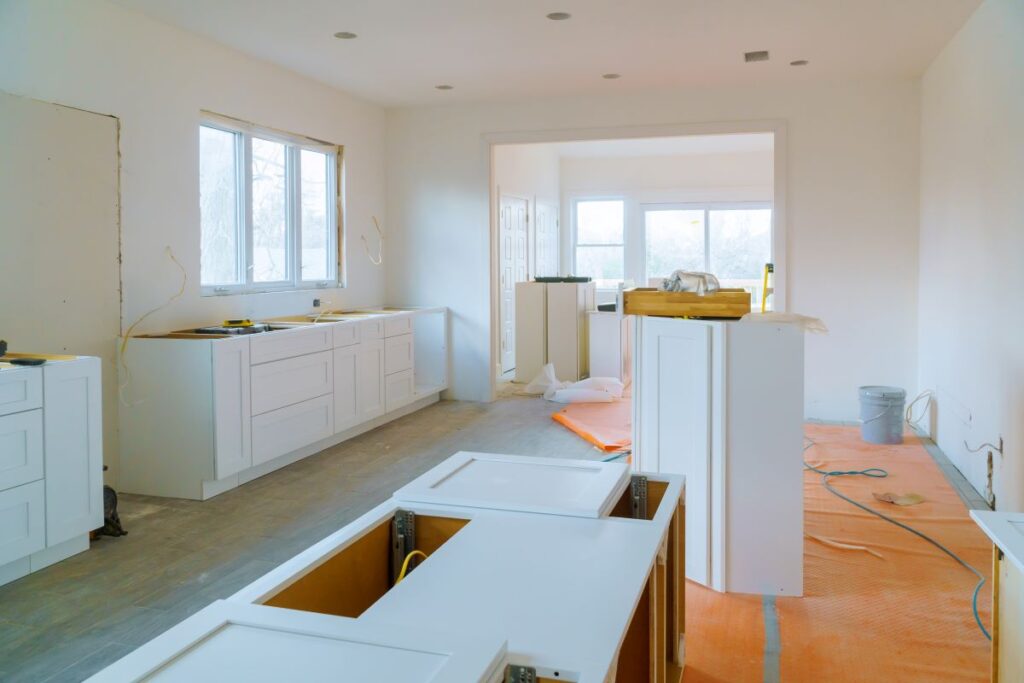
Kitchen remodels are the most common project where permit questions come up. In the five DWR service-area cities listed above, kitchen remodels require permits when any of the following are part of the project:
- Moving or adding electrical outlets, switches, or fixtures
- Installing or relocating dedicated circuits for ranges, ovens, dishwashers, or microwaves
- Rerouting water supply or drain lines for sink relocation
- Adding or moving gas lines for cooktops, ranges, or pot fillers
- Installing new range hoods vented through exterior walls
- Removing or modifying load-bearing walls
- Changing the kitchen footprint or adding square footage
Cosmetic-only updates (painting cabinets, replacing countertops on existing cabinetry, swapping hardware, replacing flooring without subfloor changes) do not trigger permit requirements in most jurisdictions. For pricing on remodeling your kitchen, read our guide, which breaks down the variables by clicking here. For projects involving trends for 2025-2026, read our guide here by clicking this text.
Bathroom Remodel Permit Requirements
Bathroom remodels follow the same permitting logic as kitchens in the five DWR service-area cities. Permits are required when the project involves:
- Plumbing relocation (moving the toilet, tub, shower, or sink)
- New or relocated electrical outlets, switches, or fixtures
- Installation or upgrade of bathroom ventilation systems
- Structural changes or wall removal
- Window or skylight modifications
Cosmetic bathroom updates (replacing tile in the same footprint, installing new vanity tops on existing cabinetry, replacing fixtures in their current locations) do not typically require permits.
How Much Do Permits Cost in the Houston Area?
Permit pricing varies across every jurisdiction and every scope of work. Some cities and counties charge flat fees for specific scopes (residential remodel, electrical, plumbing, mechanical), and some calculate permit fees as a percentage of total project cost on larger projects.
Because the fee structure is set by each jurisdiction and changes over time, DWR Interiors provides the actual permit costs after the estimate phase. Quoting a single dollar range across cities would be misleading.
How Long Does the Permitting Process Take?
Permit approval timelines run from a few days to several months depending on the city, the scope of work, and current departmental backlogs.
Quick approvals: Smaller residential remodels in cities with active online permit portals can sometimes be approved within days of submission, particularly when the plans are complete and the scope is well defined.
Longer approvals: Larger projects take significantly longer. The clearest example is a room addition in the City of Houston, which adds square footage to a residence. That type of project goes through multiple departments, including:
- Drainage plan review
- Structural engineering review
- Land usage review (verifying the addition does not exceed the allowable percentage of lot coverage)
- Setback and zoning compliance
Each department has its own set of guidelines and requirements, and a request for revisions from any one of them can restart that department’s review window. Houston room addition permits frequently take months, not days, to fully clear.
This is why DWR Interiors builds permit lead time into the project schedule honestly. We do not promise approval timelines we cannot control, and we keep clients updated throughout the review process.
Why Work with an Experienced Remodeling Contractor
Because Texas does not issue general contractor licenses, the right way to evaluate a remodeling contractor is through portfolio, references, business longevity, insurance coverage, and the credentials of their licensed trade subcontractors (plumbers and electricians). The right contractor handles permits, coordinates inspections, builds code-compliant work, and absorbs the complexity of dealing with five different city jurisdictions and multiple counties.
DWR Interiors has been doing this work in the Houston area long enough to know which inspectors prefer which paperwork, which cities approve plans faster, and which departments need extra documentation up front. That experience translates directly into shorter timelines and fewer surprises for homeowners.
FAQ: Texas Home Improvement Permits
Q: Does Texas license general contractors?
A: No. Texas only issues state licenses to plumbers and electricians. There is no state-issued general contractor license. Evaluate remodeling contractors on portfolio, references, insurance, and the credentials of their trade subcontractors.
Q: What is the only home improvement that consistently requires a permit statewide in Texas?
A: Septic system installation. Every other permit requirement is set at the city or county level.
Q: Which cities in the Houston area require permits for remodels?
A: In the DWR Interiors service area, the City of Conroe, City of Houston, City of Huntsville, City of Shenandoah, and City of Oak Ridge require permits for any remodel or construction work.
Q: What happens if an inspector finds code issues outside my project scope?
A: The municipality may require those items be brought to current code as part of the permitted work. DWR Interiors evaluates existing systems during the design phase to flag potential code-cascade items before they become surprises during inspection.
Q: How long do permits take in the City of Houston?
A: Smaller residential remodels can move quickly. Larger projects, particularly room additions that add square footage, often take months because they go through drainage, structural, land usage, and zoning review, and revisions can restart departmental review windows.
Q: Do I need a permit to replace flooring in Texas?
A: Replacing flooring (tile, hardwood, LVP, carpet) in the same footprint without subfloor modifications generally does not require a permit. For Houston-area tile installation, see our [how much laying tile costs in Houston] guide.
Q: Can a homeowner pull their own permit in Texas?
A: In most jurisdictions, yes, for work on their own primary residence. The homeowner becomes responsible for code compliance and inspection scheduling. Most homeowners choose to have their contractor handle permits.
Q: Planning a kitchen remodel, bathroom renovation, or whole-home update in Spring, The Woodlands, Conroe, or greater Houston?
DWR Interiors verifies permit requirements, coordinates inspections, and manages the entire process. Call 281-419-4144
DWR Interiors | Spring, TX | Interior Remodeling Contractor